THE FLUENT STYLE METHOD
The background
Fashion and languages have been the two constants in my career. I started working in the fashion industry while studying Translation and Interpreting, and, in one way or another, they’ve always been present. My autism and giftedness diagnoses helped me see how they connect and turn that into a method.
I realised that style, as an extension of your lifestyle, clicks when it speaks your language, and to make it undeniably yours, it should move with you. Just as you use your language differently at work and with friends, changing your register, your style can adapt to different situations without ceasing to be yours.
What you wear can influence how you think, feel, and act, so your outfit choices can shape your day and support you. And since styling is my craft, it can look as good as it feels.
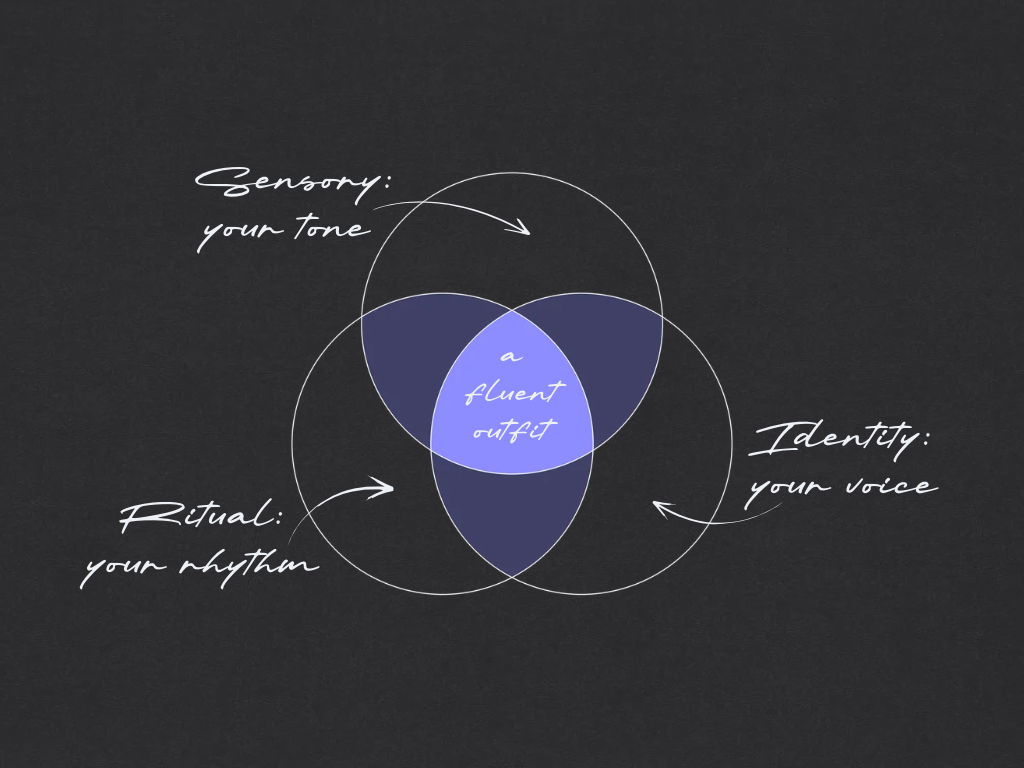
According to my method, your outfit can speak your language in three ways: sensory, ritual, and identity.
When you learn a new language, you start translating it in your head until you become fluent. The same happens with style. In our sessions, we translate who you are into what you wear and fit it around your lifestyle so it flows naturally, without having to translate at all. That’s why I call it the Fluent Style Method.
-
Sensory: your tone
In language, tone shapes how you feel and what you take from what's being said. In my method, your tone is how you feel about what you are wearing.
Many factors affect how clothes feel. Fabric is usually the first that comes to mind because it has texture, weight, and movement. Besides, fabrics can vary in breathability, strength, and elasticity, and have other properties like anti-static, compression, moisture-wicking, etc.
Construction also plays a big part in how clothes feel for two reasons: how the garment is made and how its shape interacts with your body proportions. This is completely separate from size, as all body shapes exist in all sizes. Other aspects that can affect how clothes feel are colours and prints, because they add to your outfit’s sensory load.
When one of these elements doesn’t match your tone, it can cause discomfort and quietly start draining your energy. And when it does, wearing your clothes becomes a pleasure in itself.
-
Ritual: your rhythm
In language, rhythm is the timing and flow of what’s being said. In my method, your rhythm is how you get dressed and care for your clothes.
For some people, putting outfits together can be exhausting, so they repeat the same items or formula without much thought. However, that uniform can become something more: an outfit that speaks their own language, fits easily into their routine, and reduces decision fatigue.
For others (and I include myself in this group), ritual isn’t a formula, but a grounding routine. Their getting-ready process becomes a moment of self-validation and self-regulation they need to make time for during the day.
But regardless of your approach, you need to take care of your clothes. How you organise your wardrobe and laundry is also part of ritual and should fit your routine, because the cycle doesn’t end when you take the outfit off.
-
Identity: your voice
In language, voice is the personality behind what’s being said. In my method, your voice is how your personality comes through in what you wear.
Your clothes have meaning, and since you live your life in them, they are an extension of you. That’s why it feels good to wear something you connect with, and that lets you express who you are, how you are feeling, and what you like and care about.
Clothing can also be used as a form of social camouflage, a costume to blend in at the expense of your well-being. Following trends or copying outfits can seem harmless, but your style is deeply linked to belonging and acceptance, so hiding who you are by dressing like someone else can affect your self-esteem and self-worth. The times you want to blend in, the aim is to be able to change your register without losing your voice.
When your style matches your voice, it’s not just aesthetics. It lets you experience the world from your point of view, validating who you are without trying to perform a different identity or people-please.
Becoming fluent in your style

With all of this in mind, the goal is to create outfits that match your tone, rhythm, and voice by pleasing your senses, fitting easily into your routine, and representing you. That is, an outfit that not only speaks your language, but is fluent in it: a fluent outfit.
As a Style Interpreter, I help you translate who you are into what you wear until you’re fluent in your own style. A style that adapts to registers, moods, and situations without ceasing to be yours.
Since this means something different for everyone, there isn’t a single formula to copy, but instead, a method that guides my services. While each of them focuses on a different discipline (fashion styling, image coaching, and image consulting), it also has touches of the others throughout.
How it works in each service
-
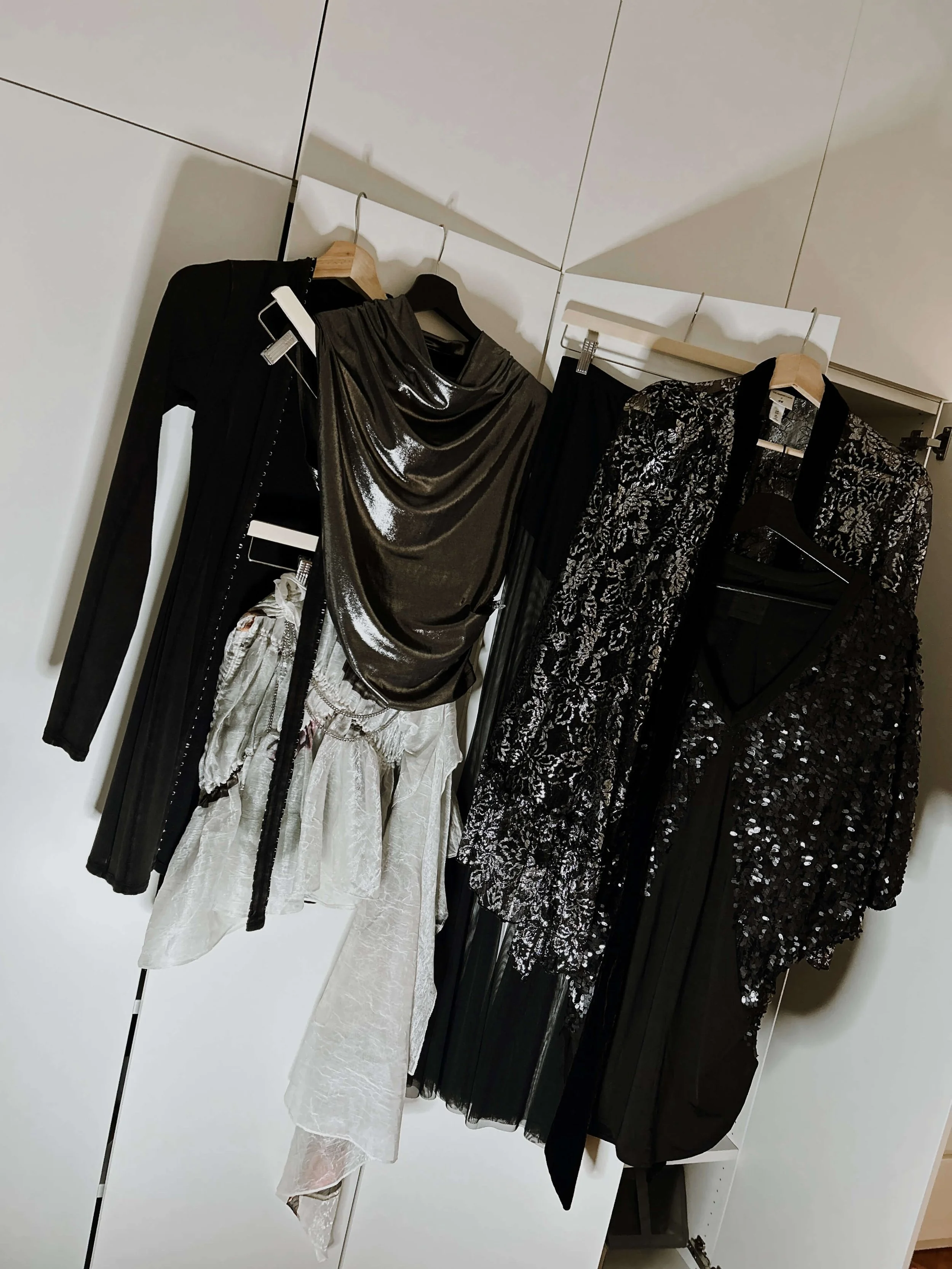
UNFOLD—your style edit
The fashion styling-focused service.
We work with what’s not physically working in your wardrobe (your tone) to build outfits and formulas that work for you (your rhythm), making sure they also feel like you (your voice).
Since it’s the most balanced service, with all three aspects having a similar weight, it’s often the natural place to start.
-

UNLOCK—your style identity
The image coaching-focused service.
As the name suggests, it leads with identity (your voice), connecting with who you are at different aesthetic levels and finding ways to express it through your style.
It also includes how certain items feel to wear (your tone), and how to translate your values into everyday life (your rhythm).
-
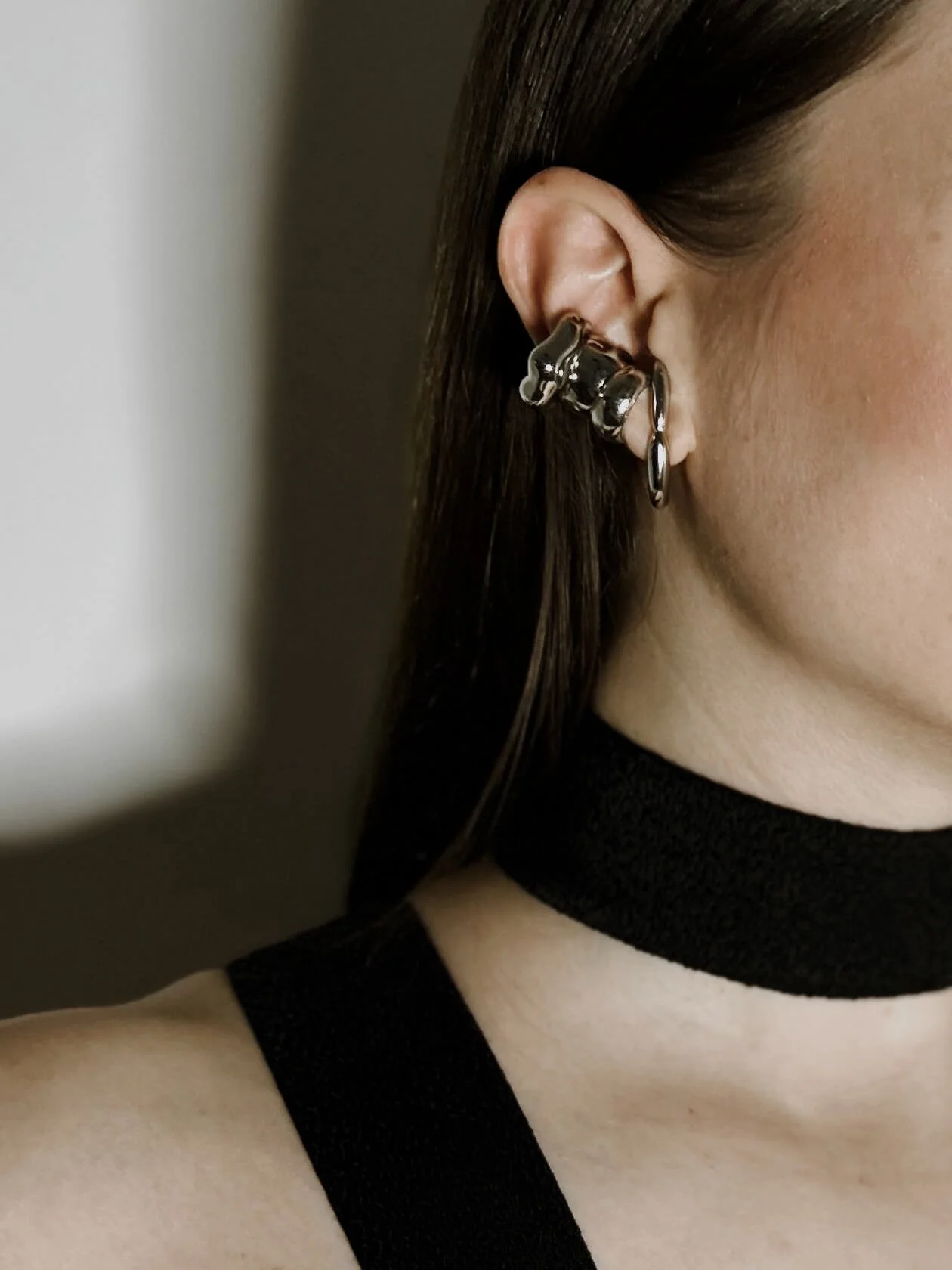
UNVEIL—your style profile
The image consulting-focused service.
We analyse what you look like to better understand your natural design, so you can dress in ways that match your personality (your voice) and enhance your best features.
Your style magazine will include recommendations on what you feel good in (your tone) and personalised systems to keep building your wardrobe and creating outfits that suit you (your rhythm).
Not sure where to start?
Book UNCOVER—your style path
I designed this method with autistic, ADHD, and gifted people in mind, but you don’t need a diagnosis. It works for anyone who wants to view their style as an extension of their identity and lifestyle.